People sometimes ask where an idea for a book originates.
I wish I had a more remarkable answer.
The truth is, most of my stories don't start with a complete plot. They don't come with a title, a cast of characters, and a fully mapped-out ending.
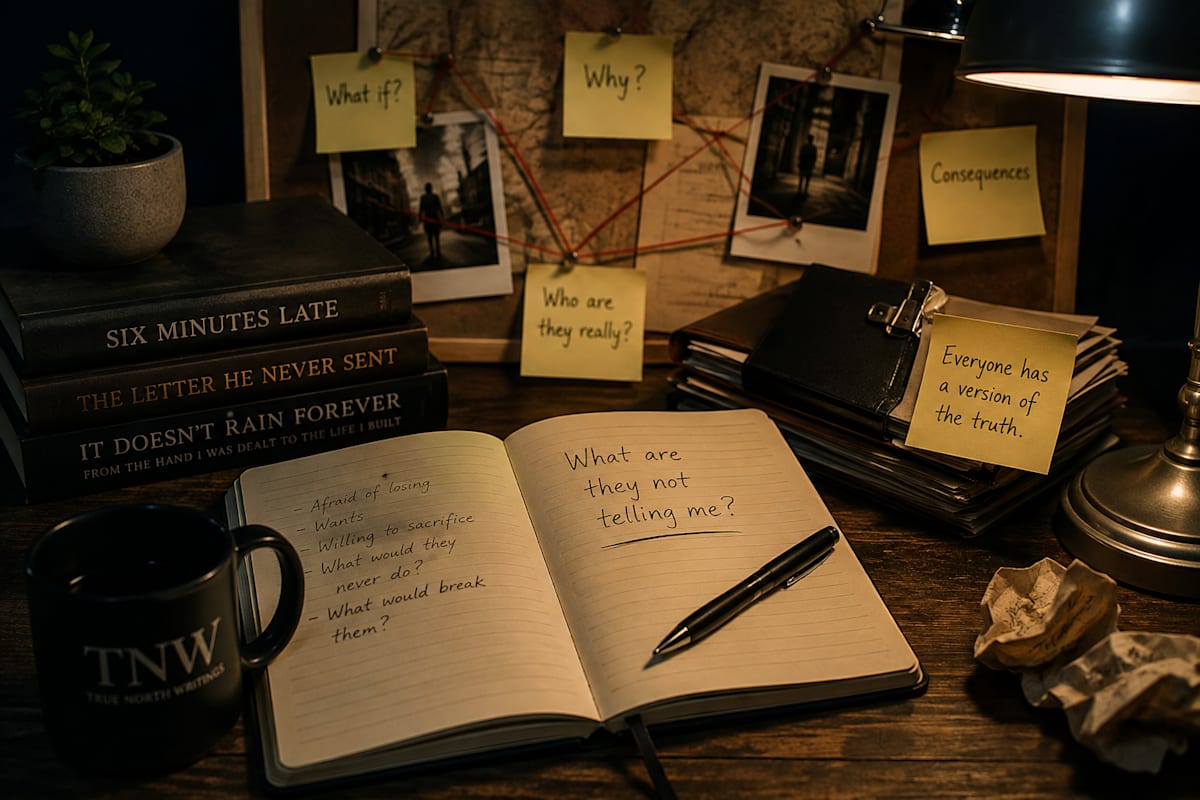
Usually, they start with a question.
What if?
What if someone arrived six minutes late?
What if a letter containing everything someone needed to say was never sent?
What if one seemingly small decision changed the direction of several lives?
Those questions are where I tend to find my stories.
I become interested in the consequences.
I find it fascinating that most of us will never realize how many moments in our lives could have turned out differently because of a decision that seemed minor at the time.
Leave the house five minutes earlier.
Answer the phone.
Don't answer it.
Say what you're thinking.
Keep it to yourself.
Trust someone.
Walk away.
Stay.
On their own, these choices can seem ordinary. But put the right people in the right circumstances, and an ordinary decision can become the start of an extraordinary story.
That's where the psychological side of writing becomes especially compelling for me.
I don't just want to know what a character does.
I want to know why.
What happened to this person before the reader met them?
What are they afraid of?
What do they desperately want?
What are they willing to sacrifice to obtain it?
And perhaps most importantly:
What are they capable of convincing themselves is justified?
That's when characters start to feel real to me.
Real people aren't perfectly good or perfectly bad. We contradict ourselves. We make emotional decisions and later justify them logically. We hurt those we love.
We forgive what we once believed was unforgivable.
Sometimes we make the right choice for the wrong reason, or the wrong choice for a reason that makes perfect sense at the time.
I want my characters to live in those uncomfortable spaces.
That's part of what shaped Six Minutes Late.
The thriller elements matter. The tension matters. The mystery matters.
But beneath all that is something I find much more intriguing:
How much can one decision cost?
That’s also why my future books might not look exactly like the ones before.
I want the freedom to explore different characters, relationships, fears, obsessions, mistakes, and consequences. Some stories may be darker. Some may be more emotional. Some may make you uncomfortable.
But I hope they all leave a lingering thought after the last page.
Because sometimes a whole novel begins with just two words:
What if?
And once that question enters my mind, I usually need to find out the answer.
— Henry Daniel Archunde Jr.